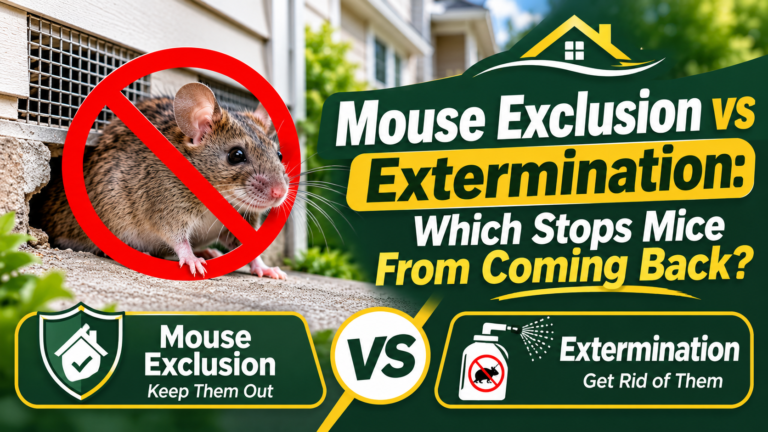

You’ve filled the gaps around your basement pipes, replaced the garage door seal and still found fresh mouse droppings. The problem may be an overlooked opening or a repair that rodents can chew through. Rodent entry point sealing involves finding and closing the structural openings mice and rats use to enter buildings. Unlike trapping, which addresses animals already inside, sealing prevents new rodents from using those entrances.
The difficulty is knowing where to look and choosing materials that withstand gnawing, moisture and movement in the building. A properly fitted metal barrier can protect an opening for years. A loose piece of steel wool or exposed expanding foam may fail much sooner.
Understanding the difference helps Connecticut homeowners avoid repairing the same gap repeatedly.
How Small Does an Opening Need to Be for Rodents to Get Inside?
House mice can squeeze through an opening approximately 1/4 inch (6 mm) wide. Rats generally need more room, although their ability to gnaw and enlarge vulnerable openings makes larger gaps a concern. The Centers for Disease Control and Prevention recommends inspecting both the inside and outside of buildings for small openings around pipes, foundations, vents and exterior doors.
A gap beneath siding may look too narrow to matter. However, mice can enter that space and move along the framing until they reach a basement or wall cavity. This explains why homeowners sometimes discover mice upstairs without finding an obvious opening near the affected room. The entrance and the place where rodents become visible are often different. When small openings are allowing repeated mouse activity, Mice Exclusion addresses the structural access routes alongside appropriate control of rodents already inside.
The Entry Points That Often Get Missed During Home Sealing
A common mistake is sealing the holes visible inside the house without inspecting the exterior route that leads to them. For example, closing the gap beneath a kitchen sink may prevent a mouse from entering that cabinet. It does not stop mice from reaching the wall cavity through an opening near the foundation. Several building features deserve closer attention.
Foundation and Sill Plate Gaps
The junction where wooden framing rests on the foundation can develop openings through construction irregularities, deteriorated repairs or building movement. On homes with stone foundations or older masonry, gaps may be concealed beneath siding or behind basement equipment. A repair must reach the actual opening rather than cover only its visible interior edge. Bulkhead doors also deserve attention. Connecticut homes with Bilco-style basement entrances may have gaps around worn door seals or where the metal frame meets the foundation.
Plumbing and Utility Penetrations
Water pipes, electrical conduits and air conditioning lines often pass through holes larger than the utilities themselves. The leftover space can become a rodent entrance. Expanding foam sometimes hides these openings without providing a durable barrier. Homeowners should pay attention to penetrations near basement ceilings and behind exterior utility equipment. Electrical and gas service components should be inspected or repaired by appropriately qualified professionals.
Garage Doors and Roofline Openings
An attached garage may have a new bottom seal but still leave small openings at the lower corners where the door meets the track. Higher up, damaged soffits and loose vent screening can provide access to attics. The ability of mice to climb rough surfaces means a complete inspection cannot stop at ground level. For homeowners trying to identify the original entrance, the patterns described in How Mice Get Into a House help distinguish exterior entry points from the openings rodents use to move between rooms.
Which Materials Actually Work for Rodent Entry Point Sealing?
The best sealing material depends on the opening’s size, location and surrounding construction. Metal barriers are commonly used because rodents cannot chew through properly selected and installed metal as easily as foam, wood or ordinary weather stripping. Cornell University’s Integrated Pest Management program identifies galvanized hardware cloth, stainless steel mesh, sheet metal and other suitable barriers as important pest exclusion materials.
| Sealing material | Suitable application | Important limitation |
| Copper mesh | Small irregular openings around pipes and structural joints | Must be packed tightly and secured so rodents cannot displace it |
| Stainless steel mesh | Openings requiring durable protection against gnawing and corrosion | Needs a secure fit and attachment to the surrounding structure |
| 1/4 inch hardware cloth | Foundation vents, larger openings and accessible wall cavities | Loose edges or poor fastening can leave access around the mesh |
| Sheet metal flashing | Larger holes and exposed structural gaps | Must be fitted and fastened without leaving openings around its edges |
| Mortar or suitable masonry repair | Deteriorated foundation joints and masonry openings | The repair must match the existing material and underlying condition |
| Rodent-resistant door sweeps | Gaps beneath exterior and garage doors | Must maintain contact with the threshold and withstand regular door movement |
For openings where both mice and rats are a concern, 1/4 inch hardware cloth is generally preferable to 1/2 inch mesh because smaller mice may pass through the larger openings. The material alone does not determine whether a repair succeeds. It must also be installed so animals cannot move around it.
Why Expanding Foam and Steel Wool Sometimes Fail
Expanding foam is not a dependable standalone rodent barrier in an active entry point. Mice and rats can gnaw through exposed foam and reopen the passage. Foam can still serve a useful purpose as insulation or part of a repair that includes an appropriately secured, rodent-resistant barrier. Steel wool has limitations too. It can rust when exposed to moisture. If it is loosely inserted, rodents may push around it or find space along the opening’s edges.
Copper or stainless steel mesh provides an alternative for certain small openings, but it also requires secure installation. North Carolina State University Extension explains these differences in its guidance on managing mice in structures.
A properly repaired opening should not rely solely on material being stuffed into an empty space. The surrounding structure must hold the barrier in place. There is another concern that is easy to overlook: the original opening may serve a building function. Covering a dryer vent with ordinary mesh can cause lint to accumulate. Blocking ventilation or drainage can create moisture problems or interfere with equipment operation. Rodent proofing must preserve the purpose of the building component being protected.
Should You Seal an Entry Point While Rodents Are Still Inside?
Sealing an active rodent entrance requires a plan for animals that may already be living inside. Closing a hole without checking for indoor activity can leave mice or rats confined within wall cavities or other inaccessible spaces. Rodents may continue gnawing in search of another route. Dead animals inside concealed areas can also create odor and sanitation problems. This is why trapping, monitoring, and structural exclusion sometimes need to happen together.
When an active entrance has been identified, an inspection should determine where the rodents are traveling, whether they are nesting inside and how the opening can be secured safely. A vacant opening can often be repaired promptly. An actively used entrance may require coordinated control before final closure.
Rat Entry Points Require a Different Inspection Focus
Although the same materials may be suitable for mice and rats, the location and condition of the openings can differ. Norway rats commonly use ground-level access routes and may burrow near foundations. Gnaw damage around a basement penetration or opening at ground level may require a more substantial repair than a small mouse gap. Rat activity also makes it important to inspect surrounding soil, damaged masonry and places where rodents could continue enlarging an opening.
A house with signs of rats near the foundation may need Professional Rat Removal as well as structural exclusion. The differences in how rats enter houses are worth understanding before assuming the same inspection priorities apply to every rodent problem. Closing one opening does little good when another accessible route remains nearby.
What Should a Professional Rodent Proofing Inspection Include?
A proper rodent proofing inspection should establish where rodents can enter, which openings need repair and whether active animals remain inside. Connecticut homeowners should expect more than a general recommendation to fill visible cracks.
A useful inspection and repair proposal identifies:
- The Areas Inspected: Foundation walls, exterior doors, utility penetrations and accessible roofline openings should be considered according to the property’s construction.
- The Openings Requiring Work: The contractor should explain which gaps are active, which are vulnerable and what material is appropriate for each repair.
- The Limits of the Proposed Service: The estimate should clarify whether trapping, monitoring, follow-up visits or additional repairs are included.
Rodent exclusion cost varies with the number of openings, accessibility and extent of the required repairs. A few accessible utility gaps are different from extensive work on a stone foundation or multi-level building. Ask whether the quote addresses only identified openings or includes a broader exterior inspection. Neither scope is automatically wrong, but understanding the difference helps avoid unexpected costs.
Why Connecticut Homes Need Periodic Exclusion Checks
Building materials change over time. Door seals wear down, exterior caulking deteriorates, and joints may develop openings as structures move. Connecticut’s seasonal temperature changes and exposure to moisture can contribute to these maintenance problems. For homes in Portland or Wallingford with older basements, bulkhead entrances and later utility installations, the critical issue is often the connection between different building materials. A newer house can have similar vulnerabilities around garage doors or equipment added after construction. Inspect accessible exterior gaps before winter and check repaired areas whenever fresh rodent activity appears.
Keeping stored food secure and reducing clutter near the foundation also supports rodent prevention. These measures reduce opportunities for rodents but cannot replace repairs to an accessible entrance.
Final Thoughts
Rodent entry point sealing is not a matter of applying the strongest filler to every visible crack. The important work is identifying the access route, choosing a suitable barrier and making sure the repair remains secure. Suburban Wildlife Solutions approaches wildlife and rodent problems through structural inspection and an understanding of animal behavior. Founder Thomas Pepe’s academic background in wildlife biology and field research informs this investigative approach. Based in Portland, CT, the company serves homeowners and businesses across central Connecticut.
If mice or rats continue appearing after previous treatments, call Suburban Wildlife Solutions at (203) 623-8350 to discuss an inspection of the openings that may be allowing them inside.
FAQs
Can Mice Chew Through Expanding Foam?
Yes. Mice can gnaw through expanding foam when it is used alone. Active entry points require appropriately secured rodent-resistant materials to provide more durable protection.
What Is the Best Mesh for Sealing Mouse Holes?
Quarter-inch hardware cloth is commonly recommended for larger mouse accessible openings. Copper or stainless steel mesh can also work for smaller gaps when securely installed.
Who Can Seal a House from Mice and Rats?
Professional rodent exclusion services inspect structural openings and install suitable barriers. Qualified contractors may also be needed for extensive masonry, electrical or specialized ventilation repairs.
Will Sealing Every Hole Get Rid of Rodents Already Inside?
Sealing exterior openings prevents further access through repaired gaps but does not remove rodents already indoors. Active trapping and monitoring may still be necessary.