Wallingford’s colonials and capes, many built between the 1940s and 1970s, carry decades of accumulated exterior gaps: settled sill plates, aging soffit boards, utility penetrations that haven’t been looked at since the house was last re-sided. Those aren’t seasonal entry points. They are structural vulnerabilities that mice, rats, squirrels, and other wildlife exploit year-round. If something is getting in now, the opening was already there. I’m Thomas Pepe, serving Wallingford and New Haven County.
My wildlife biology background shapes how I approach rodent and squirrel problems in Wallingford. I trace behavioral patterns that brought animals inside, not guessing at entry points from the interior. Mice and rats follow thermal gradients toward warmth leaking through foundation gaps. The entry is rarely where the homeowner suspected: typically an unsealed pipe penetration or a sill plate that separated from the mudsill years ago. Eastern gray squirrels begin evaluating roofline cavities in late September. By the time an attic sounds occupied, the squirrel has spent weeks testing that opening. I identify those structural indicators on inspection and explain why the problem exists.

Mice use wall voids as travel corridors between their nest and your kitchen. The scratching you hear at night is that movement. It persists because trapping one mouse doesn't close the entry others are using. The gap is usually at the sill plate, foundation, or where a pipe enters the framing.
Gray squirrels gnaw continuously because their incisors never stop growing. Chewing sounds mean structural damage is in progress: insulation, wood framing, or wiring. The entry point is almost always a deteriorated fascia board or a soffit corner, not a large obvious hole. Squirrels work it open from a small existing gap.
The droppings mark the destination, not the source. Mice nest in insulation or wall voids and travel to food. The foraging route runs behind your refrigerator or beneath cabinet toe kicks. Closing interior gaps without sealing the exterior entry doesn't resolve the problem. Both conditions need to be addressed together.
Norway rats follow scent trails along foundation walls. Once a rat finds a gap below the sill plate or near a utility penetration, it marks the path for others. Most property owners have never inspected those areas. That's where the entry is, and it's rarely visible from inside.
A bat inside your home is rarely an isolated animal. It belongs to a colony roosting somewhere above, in the attic or a wall void. Colonies use openings less than an inch wide at soffit junctions or chimney flashings. The visible bat is the indicator; the colony is the actual problem.
Trap-and-release and bait programs fail to stop recurring problems because they treat the animal, not the structure. If the entry gap is still open, a different animal will find it. I focus on locating and permanently closing the structural breach, not on managing the symptom that made you call.
Raccoons do not break into structurally sound homes. They enter through gaps that already exist: a failed soffit, an open ridge vent, an uncapped chimney. Removing the raccoon without closing the access point produces the same call a few weeks later. Structural repair is part of every raccoon job I complete.
Wallingford sits astride the Quinnipiac River in northern New Haven County, between New Haven to the south and Meriden to the north. The river is a direct travel corridor for raccoons and Norway rats moving between green spaces year-round. The Emerson Leonard Wildlife Area on the south side of town and Durham Meadows State Wildlife Area to the southeast keep wildlife populations adjacent to established residential neighborhoods regardless of season.
Roughly 46% of Wallingford’s homes predate 1970, concentrated in Wallingford Center and neighborhoods west of Main Street. Decades of structural movement produce the conditions wildlife exploit: sill plates pulled from mudsills, soffit corners separated with age, vent screens corroded past function- predictable findings in postwar homes reaching their fifth or sixth decade.
The mature oak and maple canopy along streets near Choate Rosemary Hall and Hall Avenue eliminates the open ground squirrels would otherwise need to cross to reach a roofline.
Every service I provide in Wallingford starts with a complete exterior inspection to identify the structural gaps driving the problem. What I find determines what I recommend. The following services address the most common wildlife and rodent conditions I encounter here.
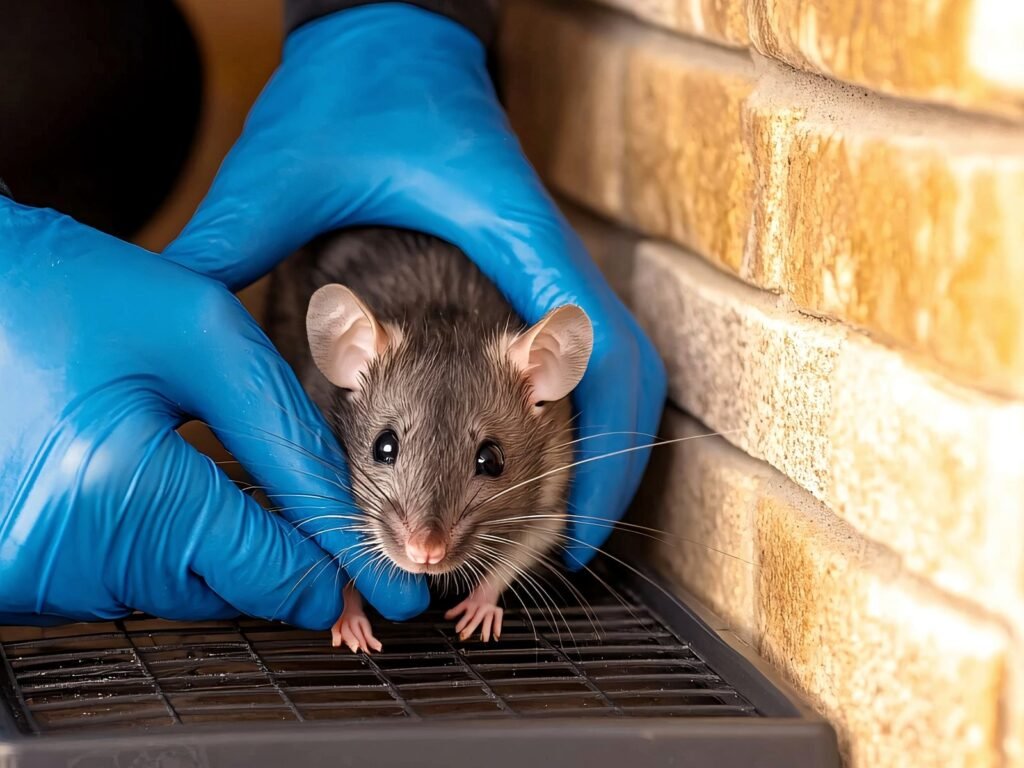
Most rodent services in Wallingford address what's happening inside after mice or rats are already settled. I start from the exterior, sealing every gap along the foundation sill, every pipe penetration, every compromised vent screen. Interior trapping runs alongside that work. Resolution comes only when the structure is fully closed.
Eastern gray squirrels access Wallingford attics through fascia board gaps, soffit corners, and deteriorated ridge vents, usually at spots homeowners have no reason to inspect. I install one-way exclusion devices at active entry points so animals inside can leave but not return. After clearance is confirmed, I seal the structural opening.
Raccoons entering Wallingford attics use predictable access points: open ridge vents, failed soffit sections, and damaged drip edge along rooflines. I identify the structural entry before recommending removal, because removing the animal first often leaves young behind or allows re-entry. Exclusion and repair are part of every raccoon removal I complete.
Wildlife damage in Wallingford homes typically involves contaminated insulation, chewed wiring, and gnawed fascia. I repair what animals damaged as part of the same service, not a separate call. Leaving damaged insulation in place after exclusion maintains conditions that attract re-entry and creates a liability if wiring was compromised during the infestation.
Connecticut bat colony exclusion is timing-dependent. I don't seal bat entry points between May 1 and July 31, when flightless young are present. Sealing during that window is illegal and creates secondary problems. Outside that period, I install one-way devices and permanently close the structure so the colony cannot re-establish.
Starlings and house sparrows nesting in soffits, vents, or open wall cavities are the most common bird calls in Wallingford. They enter through broken vent covers, open dryer vents, and uncapped pipe openings. I remove nesting material, install exclusion hardware, and seal the access point to prevent the same pair from returning.
When you call, the first conversation covers what you’re observing and what that evidence indicates. I schedule inspections promptly, not weeks out when active evidence is present. The inspection runs from roofline to foundation. I photograph every active entry and structural gap, walk through findings before recommending work, and explain which entries are active and what I would address first.
Most exclusion and sealing are completed in one or two visits. When damage repair is in scope, I complete it alongside exclusion work. After completion, I document what was sealed and where.

If you’re hearing sounds in your walls or attic, or finding evidence of rodents in your Wallingford home, call me directly at (203) 623-8350. I serve Wallingford and surrounding New Haven County towns. I’d rather identify the entry point now than have you discover compounding structural damage later.
Mice move indoors when nighttime temperatures consistently drop below 50°F. They follow thermal gradients that signal accessible gaps in a structure. The cold weather reveals the entry point, but does not create it.
Gray squirrels begin seeking winter denning sites in late September. Sounds in the attic during fall usually mean a squirrel is enlarging an existing gap in the fascia, soffit, or ridge vent structure.
I start at the roofline and work to the foundation, photographing every active entry and structural gap. After the inspection, I walk through my findings with you before recommending any work.
Removal extracts the animal currently present. Exclusion seals the structural gaps that allowed entry so new animals cannot use the same access route. Removal without exclusion produces recurring calls.
Yes. Homes built before 1970, roughly half of Wallingford’s housing stock, commonly have settled sill plates, corroded vent screens, and aging soffit sections that create accessible gaps as the structure ages.